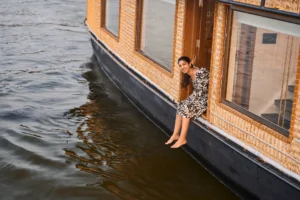
An exploration of one of India’s most resilient and beloved travel traditions — and why it only deepens with time.
Some travel experiences age. They lose their shine as they become familiar, as the photographs accumulate, as visitor numbers grow and the original magic thins. Houseboat tourism in Kerala is not one of those experiences. After three decades of growth — through shifting travel trends, pandemic disruptions, and the relentless proliferation of new destinations — Kerala’s backwaters remain among the most requested and most recommended travel experiences in the country. This piece explores why that is, and what makes an alleppey backwater cruise still feel, for most travellers, like something genuinely new.
900+ km of backwater canals in Kerala
1,500+ registered houseboats in Alappuzha
3 tourism classification tiers (Silver, Gold, Diamond)
250+ bird species recorded on Vembanad Lake
How Kerala’s Houseboat Tourism Was Born
The story begins not with tourism at all, but with trade. For centuries, the flat-bottomed boats called kettuvallam — built without nails from jackfruit wood and coir rope, with arching canopies of woven bamboo — moved rice, spices, and coir between the inland farms and coastal markets of Kerala. They were the trucks of their time, slow and dependable, as much a part of the backwater landscape as the palms that lined every bank.
Pre-1980s
The working era
Kettuvallam carry rice and coir across Kerala’s 900km backwater network. Essential to coastal trade.
Late 1980s
First tourism conversions
Pioneering operators begin converting rice barges into basic tourist accommodations. Kerala Tourism takes note.
1990s
Rapid expansion
The concept spreads quickly. Kerala Tourism develops the “God’s Own Country” campaign, with the houseboat at its visual centre.
2000s–2010s
Regulation and luxury
Classification standards introduced. Luxury vessels emerge with teak interiors and full-service crews. International recognition grows.
Today
Sustainable premium tourism
Eco-standards tighten. Solar power, responsible waste, and locally sourced food become markers of the better operators.
Why the Alleppey Backwater Cruise Endures
The simplest answer is also the truest: the backwaters themselves have not changed. Vembanad Lake is still the longest lake in India. The Kuttanad paddy fields still sit below sea level. The migratory birds still arrive on schedule each November. The fishermen still cast their Chinese nets at the lake’s edge at dawn in the same manner their grandfathers did. These are not manufactured experiences, not recreations for visitors. They are the uninterrupted textures of a place that has always been this way.
“What surprises people about the Alleppey backwater cruise is not that it’s beautiful — they expected that. It’s that it’s real. Every scene is simply life continuing as it always has, and you are, briefly, part of it.”
The other reason is more personal. Every trip through the backwaters is shaped by its specific moment: the season, the weather, the conversations with the boatman, the particular light on a particular canal on a particular afternoon. Travellers who return — and a remarkable number do — consistently describe the experience as different each time. Not because anything has been rearranged, but because they arrive differently each time, and the waterways simply reflect back what they bring.
The Major Backwater Destinations: How They Compare
Alleppey (Alappuzha)
★ Most popular
The original and still the finest for variety — open lake, village canals, bird life, and the famous Nehru Trophy heritage. Best network of waterways in Kerala.
Kumarakom
Quieter and more resort-adjacent, with excellent bird watching at the Kumarakom Bird Sanctuary. More isolated feel, good for couples seeking seclusion.
Poovar
Where the backwaters meet the sea near Thiruvananthapuram. Dramatic estuary scenery, wilder and less travelled. A niche choice for adventurous travellers.
Kollam
Southern starting point for the Kollam-Alleppey cruise, one of India’s longest backwater journeys. Ideal for those wanting extended time on the water.
What Houseboat Tourism Has Given Kerala
Beyond the traveller’s experience, houseboat tourism has had profound effects on the communities of the backwater region. Families whose livelihoods once depended entirely on the precarious coir and rice industries found new, more stable income as boatmen, cooks, and hospitality workers. Villages that might otherwise have drained of their working population retained their community fabric.
The ecological compact has, at times, been tested — too many vessels on narrow canals, noise pollution, inadequate waste management from operators cutting corners. But the better segment of the industry has responded seriously. Responsible operators operate solar-assisted boats, enforce strict waste protocols, and actively contribute to the preservation of the waterways that sustain their businesses.
The next chapter: slow tourism and the conscious traveller
The most meaningful shift in Kerala’s houseboat tourism in recent years is the growing number of travellers who come not for the photographs, but for the pace. The backwater cruise has found a new audience among people who have grown tired of itineraries, who want to subtract rather than accumulate, who understand that the value of a trip is not measured by how many things it contains.
For these travellers, an Alleppey backwater cruise is not the complement to a larger Kerala trip. It is the trip. Two days on the water, a morning of uninterrupted quiet, a sunset over Vembanad that nobody pre-arranged. This is the version of houseboat tourism that will endure the longest.
Frequently Asked Questions
Why is houseboat tourism in Kerala so popular compared to other states?
Kerala’s 900km backwater network is unique in India — no other region combines this density of waterways with the cultural richness, biodiversity, and heritage cuisine that the backwaters offer. The experience is genuinely irreproducible elsewhere.
How long should an alleppey backwater cruise ideally last?
An overnight cruise (approximately 24 hours) is considered the minimum for a meaningful experience. Two nights allow exploration of multiple waterway zones and a much deeper sense of the backwater rhythm.
Is houseboat tourism in Kerala environmentally sustainable?
It depends on the operator. The better operators have adopted solar power, responsible waste disposal, and locally sourced provisions. Kerala Tourism’s classification system helps travellers identify vessels with higher environmental standards.
What wildlife can you see on an alleppey backwater cruise?
Vembanad Lake and the Kuttanad canals host over 250 bird species, including kingfishers, egrets, herons, darters, cormorants, and in winter, migratory species from as far as Siberia and Central Asia. Otters are occasionally seen.
Can solo travellers enjoy a houseboat experience in Alleppey?
Yes. Several operators offer single-person bookings or shared-boat arrangements for solo travellers. It is an excellent way to experience the backwaters without the logistical complexity of group coordination.
Houseboat tourism in Kerala has lasted not because it was marketed well — but because the backwaters themselves are genuinely extraordinary.
Trends come and go. Destinations rise and fall. But there is something in the particular quality of Vembanad at dawn — the mist, the silence, the first light catching the water — that resists becoming ordinary. Every generation of travellers discovers it as though for the first time. That is not a coincidence. It is what the backwaters do.