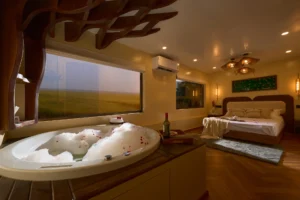
The sun hasn’t quite risen yet when the first sound reaches you — not an alarm, but the low, musical call of a kingfisher somewhere close. You are on the water. The houseboat has anchored overnight at the edge of a canal bordered by swaying palms, and the air carries that particular morning smell of Kerala: mist, green things, and the first suggestion of coconut oil from the galley below. This is what a luxury houseboat alappuzha experience feels like at its heart — not a list of amenities, but a quality of being that you carry back with you long after the journey ends. In this guide, we explore what sets Alappuzha’s finest houseboats apart, how the tradition began, what to expect on board, and why this corner of Kerala has become one of the most sought-after slow travel destinations in the world.
The Living Heritage of Alappuzha’s Waterways
Alappuzha — called Alleppey in the colonial shorthand that persists in most travel writing — was described by the Venetian explorer Vasco da Gama as the “Venice of the East.” The comparison does it a disservice. Venice is beautiful, but it lacks the profusion of green that lines every canal here: the unbroken walls of coconut palms, the emerald paddy fields of Kuttanad sitting two metres below sea level, the hyacinth-covered still ponds that catch the afternoon light like hammered copper.
For centuries, this network of backwaters served as Kerala’s main highway. The traditional vessel, the kettuvallam, carried rice and coir between the interior and the coast, built from jackfruit wood and woven bamboo without a single nail. When Kerala began transforming these working boats into tourism vessels in the late 1980s, it did something remarkable: it created a form of travel that put the journey itself — rather than any destination — at the centre of the experience.
The backwaters don’t just show you Kerala. They remove everything that isn’t Kerala — the noise, the rush, the feeling that you should be somewhere else — until only the essential remains.
Luxury on the Water: What It Actually Means
The word “luxury” is used so freely in travel writing that it has lost most of its meaning. On the backwaters of Alappuzha, true luxury is not about square footage or thread counts — though the finest houseboats offer both. It is about the quality of attention: to the food, to the route, to the rhythm of the day, and to the particular desires of whoever is on board.
What separates a premium boat from the rest
Walk the jetty at Finishing Point in Alleppey on any given morning and you’ll find boats in every price range lined up for departure. The differences become apparent quickly. The finest vessels have teak decks that are well-maintained and warm underfoot. The bedrooms are furnished with real beds — not narrow bunks — and en-suite bathrooms with proper water pressure. The kitchen produces food that is genuinely Kerala, not a diluted version made for nervous tourist palates.
Furnished sun deck
Cushioned seating, overhead shade canopy, unobstructed views of the water.
Kerala cuisine on board
Freshly prepared meals by trained cooks using daily-sourced local ingredients.
Climate control
Air-conditioned bedrooms with quality linen and natural ventilation options.
Attentive crew
Experienced boatman, cook, and steward who understand Kerala hospitality.
Eco-responsible design
Filtered water systems, responsible waste management, minimal plastic.
Personalised service
Menus and routes adapted to your group’s preferences and schedule.
Wellness and the Backwater Rhythm
Kerala is the homeland of Ayurveda, and there is something almost Ayurvedic about the backwater experience itself — even before you factor in the many wellness centres that line the canals. The pace of a houseboat journey aligns instinctively with Ayurvedic principles: regular meals, adequate sleep, time spent in nature, freedom from digital overstimulation.
Guests frequently report that the first night on the water is the best sleep they have had in years. There is a scientific basis for this: the gentle rocking of a moored vessel activates the vestibular system in a way that deepens sleep, similar to the mechanism that makes babies sleep in moving vehicles. Combined with the absence of artificial light pollution and the rhythmic sound of water, the backwaters create conditions for genuine rest that few hotel rooms can replicate.
The Seasons of Alappuzha’s Waterways
Nov – Feb
Peak season. Cool, clear, and ideal — the backwaters are at their most serene and the sky most reliably blue. Book well in advance.
Mar – Apr
Warmer and pleasantly quiet. The light is golden and dramatic. A good choice for those who prefer fewer fellow travellers on the water.
May – Sep
The monsoon season transforms the landscape dramatically. Not recommended for first-timers, but extraordinary for those who know what to expect.
Oct
The retreat of the rains. The landscape is at its greenest and the water its most alive. A hidden gem of the backwater calendar.
A Day Lived Unhurriedly
There is an art to a day on a luxury houseboat in Alappuzha that takes most guests an hour or two to learn. It involves giving up the instinct to do something, to move toward a destination, to fill time with purpose. The backwaters reward a different orientation entirely.
Breakfast arrives on deck as the boat moves through the narrower canals: idiyappam with coconut milk, or perhaps a bowl of puttu with banana and honey. The cook may ask, gently, whether you’d prefer fish or chicken for lunch. A fisherman on the bank offers a wave. A child on a bicycle stops to watch the boat pass. These are not moments from a travel advertisement — they are the actual texture of the day.
By afternoon, many guests find themselves simply sitting. Not meditating, not reading, not scrolling. Just sitting, watching the light move across the water. There are travellers who describe this as the most valuable part of the entire trip: the discovery that doing nothing — truly nothing — is not only permissible, but restorative.
Alappuzha Among Kerala’s Backwater Destinations
Kumarakom, Poovar, and Kasaragod all offer their own versions of the backwater experience, each with distinct character. Kumarakom is the quietest and most resort-oriented; Poovar is wilder, where estuary meets sea. But Alappuzha remains the beating heart of the tradition, and for good reason.
The canal network here is the most intricate — hundreds of kilometres of waterways threading between paddy fields, toddy tapper’s groves, canal-side temples, and fishing villages that have been there for a thousand years. The famous Nehru Trophy Boat Race, held annually on Punnamada Lake, traces its heritage directly to the working traditions of this waterway. The sheer density of life visible from the water — bird life, village life, the daily rituals of the backwater communities — makes Alappuzha singular.
What Mayooram Cruises Brings to the Experience
Mayooram Cruises approaches the lluxury houseboat alappuzha experience as a craft, not merely a service. The team has spent years refining what a perfect day on the backwaters should feel like — from the first cup of morning tea handed to you on the sun deck before the engine starts, to the last exchange with your boatman as the boat returns to the jetty.
Every boat in the Mayooram fleet is maintained to a standard that reflects genuine pride in the vessels. Hygiene protocols are taken seriously. The cooks are trained not just in preparation but in the cultural context of what they serve — the difference between a Kuttanad fish curry and a coastal one, the reason puttu is eaten with chickpea curry in some households and with banana in others. These details, insignificant in isolation, add up to an experience that feels genuinely of Kerala rather than assembled for consumption.
Frequently Asked Questions
What makes a luxury houseboat in Alappuzha different from a standard one?
Luxury boats offer superior furnishings, curated Kerala cuisine, higher crew-to-guest ratios, and meticulous hygiene standards. The experience feels attentive rather than transactional.
Is an overnight cruise better than a day cruise in Alappuzha?
For most travellers, yes. The backwaters at sunset, anchored under a canopy of stars, and the extraordinary stillness of a backwater morning are experiences a day cruise cannot offer.
How much does a luxury houseboat in Alappuzha cost per night?
Luxury configurations typically range from ₹12,000 to ₹25,000 per night depending on the season, number of bedrooms, and inclusions. Peak season rates apply from November to January.
Are the backwaters safe for elderly travellers or those with limited mobility?
Yes. The water is calm and the boats are stable. Steps on board are manageable. Inform the operator in advance and a well-trained crew will ensure the experience is comfortable throughout.
Can I use my mobile phone or stay connected during the cruise?
Mobile coverage is generally available along most routes, though patchy in some areas. Many guests find the natural disconnection one of the most welcome aspects of the experience.
Perhaps the backwaters offer something we have lost the language for — the experience of time as abundance rather than scarcity.
Somewhere in the middle of a backwater afternoon, with the paddy fields sliding past and a cup of chai cooling in your hands and nothing — absolutely nothing — requiring your attention, something loosens in the chest. It is not dramatic. It is quiet and real, like a knot you forgot was there finally giving way.
That is what a luxury houseboat in Alappuzha offers, at its finest: not a destination arrived at, but a quality of presence recovered. The kind that, once tasted, makes the ordinary world look a little different on the return.